
Types of Mutual Funds in India: Equity, Debt, Hybrid, and ELSS Explained
 Jul, 11 2026
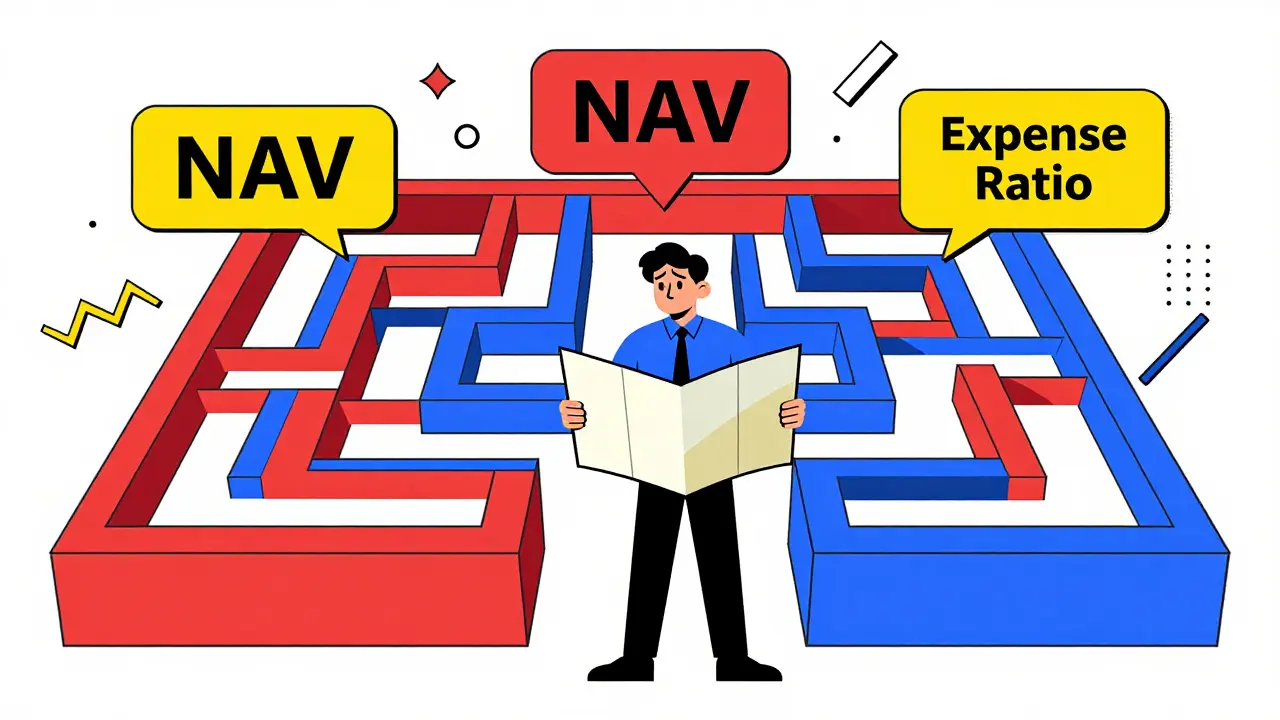
Investing money can feel like trying to read a map written in a foreign language. You know you want to go somewhere better financially, but the path is cluttered with jargon like 'NAV,' 'expense ratio,' and 'asset allocation.' In India, mutual funds are one of the most popular ways to grow wealth because they pool money from thousands of investors to buy a diversified portfolio of stocks or bonds. But here is the catch: not all mutual funds are created equal.
Choosing the wrong type of fund for your goal is like wearing winter boots to a beach party. It’s just not right for the occasion. Whether you are saving for a house down payment in five years or planning for retirement in thirty, understanding the specific types of Mutual Funds available in India is crucial. Let’s break down the four main categories-Equity, Debt, Hybrid, and ELSS-so you can pick the one that actually fits your life.
Equity Mutual Funds: The Growth Engine
If you have a long time horizon and can stomach some volatility, equity funds are where you start. These funds invest primarily in stocks (shares) of companies. When those companies grow and make profits, the value of your investment goes up. It’s simple supply and demand, scaled up.
Equity Mutual Funds are investment vehicles that allocate at least 65% of their assets to equities or equity-related instruments. They are designed for capital appreciation over the long term.
The Securities and Exchange Board of India (SEBI) categorizes these based on market capitalization. This matters because it dictates risk.
- Large Cap Funds: These invest in the top 100 companies by market cap (like Reliance Industries or HDFC Bank). They are relatively stable but offer moderate growth. Think of them as the steady grandparents of the stock market.
- Mid Cap and Small Cap Funds: These target smaller companies. They have higher growth potential but come with significantly higher risk. If the market turns sour, these funds fall harder than large caps.
- Sectoral/Thematic Funds: These bet on a specific industry, like IT, Pharma, or Infrastructure. If that sector booms, you win big. If it crashes, you lose big. These are for experienced investors who understand cyclical trends.
For most beginners, a diversified Large Cap or Flexi Cap fund is the safest entry point. Remember, equity investments should generally be held for more than seven years to smooth out market fluctuations.
Debt Mutual Funds: The Stability Anchor
Not everyone wants to ride the rollercoaster of the stock market. That’s where debt funds come in. Instead of buying shares, these funds lend money to governments and corporations by investing in fixed-income securities like government bonds, corporate bonds, and treasury bills.
Debt Mutual Funds are funds that invest primarily in fixed-income instruments such as government securities, corporate bonds, and commercial paper. They aim to provide regular income and preserve capital.
Why would you choose this? Predictability. While returns are lower than equity, they are much more consistent. Debt funds are ideal for short-to-medium-term goals, like saving for a wedding or a car.
Here is how SEBI classifies them based on maturity periods:
- Overnight Funds: Money stays invested for just one day. Extremely low risk, very low return. Good for parking cash temporarily.
- Liquid Funds: Invests in securities maturing within 91 days. Highly liquid, meaning you can withdraw your money quickly without much penalty.
- Short Duration & Medium Duration Funds: These hold bonds with maturities ranging from 1 to 4 years. They balance yield and interest rate risk.
- Long Duration Funds: These hold bonds with longer maturities. They offer higher yields but are sensitive to changes in interest rates. If rates go up, bond prices go down, and vice versa.
A common mistake is thinking debt funds are risk-free. They aren’t. Credit risk (the issuer defaulting) and interest rate risk still exist. Always check the credit rating of the underlying bonds before investing.
Hybrid Mutual Funds: The Best of Both Worlds?
What if you want the growth of equity but the safety net of debt? Hybrid funds mix both asset classes in a single scheme. The fund manager decides the allocation ratio, which can change based on market conditions.
Hybrid Mutual Funds are diversified portfolios that invest in both equity and debt instruments to balance risk and reward.
This category is perfect for investors who don’t want to manage two separate portfolios. Here are the main types:
- Balanced Advantage Funds (BAF): Also known as dynamic asset allocation funds. The manager actively shifts between equity and debt based on valuation metrics. If stocks look expensive, they move to debt. If stocks look cheap, they buy more equity. This requires a skilled manager.
- Aggressive Hybrid Funds: Typically invest 65-80% in equity and 20-35% in debt. They lean heavily toward growth but use debt to cushion falls.
- Conservative Hybrid Funds: The opposite. They invest 75-90% in debt and only 10-25% in equity. These are for conservative investors seeking slightly better returns than pure debt funds.
- Arbitrage Funds: These exploit price differences between the cash and derivative markets. They are taxed like equity funds but carry risk similar to debt funds. A niche but useful tool for tax-efficient parking of funds.
Hybrid funds reduce the need for constant rebalancing on your part. However, they often have higher expense ratios than pure equity or debt funds because managing two asset classes is complex.

ELSS: Tax Saving with a Twist
Every year when tax season hits, Indians rush to find ways to save under Section 80C of the Income Tax Act. Enter Equity Linked Savings Schemes (ELSS). These are essentially equity mutual funds with a lock-in period.
ELSS (Equity Linked Savings Scheme) is a type of equity mutual fund that offers tax benefits under Section 80C with a mandatory three-year lock-in period.
Here is why ELSS stands out:
- Shortest Lock-In: Compared to Public Provident Fund (PPF) or National Pension System (NPS), which have lock-ins of 15 and varying years respectively, ELSS has the shortest lock-in period of just three years.
- High Growth Potential: Since ELSS funds must invest at least 80% in equity, they have the potential to generate high returns, beating inflation significantly over time.
- Tax Efficiency: Long-term capital gains (LTCG) from equity funds are taxed at 10% above ₹1 lakh per year. This is often lower than the tax slab rate for salaried individuals.
However, there is a catch. You cannot touch your money for three years. If you need emergency funds, ELSS is not the place to keep them. Use it only for surplus savings that you genuinely do not need for the next few years.
Comparison Table: Which Fund Fits Your Goal?
| Fund Type | Risk Level | Potential Return | Ideal Time Horizon | Best For |
|---|---|---|---|---|
| Equity | High | 12-15%+ (long term) | 7+ Years | Wealth creation, Retirement |
| Debt | Low to Moderate | 6-8% | 1-3 Years | Goal-based saving, Emergency fund |
| Hybrid | Moderate | 8-12% | 3-5 Years | Balanced portfolios, Moderate risk appetite |
| ELSS | High | 12-15%+ (long term) | 3+ Years (Lock-in) | Tax saving + Growth |

How to Choose the Right Fund for You
Knowing the types is half the battle. The other half is matching them to your personal financial situation. Ask yourself these three questions:
1. What is my goal? If you are saving for a vacation in two years, stick to Liquid or Short Duration Debt funds. Do not put that money in Equity. If you are saving for your child’s education in fifteen years, Equity or Aggressive Hybrid funds are your best friends.
2. What is my risk tolerance? Be honest. If seeing your portfolio drop 10% in a month keeps you awake at night, avoid pure Equity funds. Opt for Conservative Hybrid or Debt funds. Risk tolerance isn't just about money; it's about psychology.
3. How much do I know? If you are new to investing, start with Direct Plans of Index Funds or Large Cap Funds. Avoid Sectoral funds until you have studied the industries deeply. Direct plans have lower expense ratios than Regular plans because you cut out the distributor commission, which compounds significantly over time.
Common Pitfalls to Avoid
Even with the best knowledge, mistakes happen. Here are the most common ones Indian investors make:
- Chasing Past Performance: Just because a Small Cap fund returned 30% last year doesn't mean it will do so again. Past performance is not indicative of future results.
- Ignoring Expense Ratios: A 1% difference in expense ratio can eat up 10-15% of your total corpus over 20 years. Always compare direct vs. regular plans.
- Timing the Market: Trying to buy low and sell high consistently is nearly impossible. Stick to Systematic Investment Plans (SIPs) to average out costs over time.
- Over-diversification: Holding ten different equity funds might sound safe, but many overlap in holdings. Three well-chosen funds across different categories are usually enough.
Next Steps for New Investors
Start small. Open an account with a registered mutual fund platform or your bank. Begin with a SIP in a Nifty 50 Index Fund or a Large Cap Fund. As you learn more, gradually add Debt or Hybrid funds to balance your portfolio. Review your allocation once a year. Life changes-marriage, kids, job changes-and your investments should adapt too.
Remember, mutual funds are subject to market risks. Read all scheme-related documents carefully. If you are unsure, consult a SEBI-registered investment advisor. Don't let fear stop you from starting, but don't let ignorance drive you into risky bets either.
What is the minimum amount to invest in mutual funds in India?
Most mutual funds allow you to start with as little as ₹500 per month via SIP (Systematic Investment Plan). Some even allow lump-sum investments starting at ₹1,000. There is no high barrier to entry.
Are mutual funds safer than Fixed Deposits?
No. Mutual funds are subject to market risks. Equity funds can lose value. Debt funds are safer but still carry credit and interest rate risks. Fixed Deposits offer guaranteed returns and principal protection (up to ₹5 lakhs per bank under DICGC insurance).
What is the difference between Direct and Regular mutual funds?
Direct funds are bought directly from the AMC without a distributor, so they have lower expense ratios. Regular funds involve a distributor who earns a commission, leading to higher costs and potentially lower returns for you over time.
Can I withdraw money from ELSS before 3 years?
No. The three-year lock-in period is mandatory for ELSS units. Each unit has its own lock-in period starting from the date of purchase. Early withdrawal is not permitted.
How are mutual fund returns taxed in India?
Equity funds: LTCG (held >1 year) is taxed at 10% above ₹1 lakh. STCG (held <1 year) is taxed at 15%. Debt funds: Gains are added to your income and taxed as per your slab rate. There is no indexation benefit for debt funds purchased after April 1, 2023.