
UCC Article 12 Explained: NFT Ownership, Controllable Electronic Records, and Digital Property Rights
 Mar, 31 2026
Imagine spending thousands on a rare digital artwork, only to find out you can’t prove you own it in a courtroom. Before July 2022, that was a very real risk for anyone dealing with digital assetsassets stored in electronic form with market value. Laws were built for physical goods and paper contracts, not blockchain tokens. The confusion created a gap where businesses couldn’t lend against crypto, and buyers worried their purchases could be seized by creditors.
This changed with the introduction of UCC Article 12. As of March 2026, this legal framework has reshaped how we handle digital property rights. It doesn’t just touch on cryptocurrencies; it fundamentally alters the legal standing of Non-Fungible Tokens (NFTs) and other virtual currencies. If you hold digital assets, you need to know how this rulebook affects your wallet and your business plans.
What Exactly Is UCC Article 12?
Uniform Commercial Code (UCC) Article 12 was finalized by the Uniform Law Commissiona nonpartisan group that drafts model laws for US states and the American Law Institute in July 2022. Its main job is to bring certainty to the chaotic world of digital commerce. Before this update, digital tokens were lumped into a vague legal category called “general intangibles.” That label offered little protection because it didn’t account for the unique way blockchain technology works.
The amendment creates a new classification known as a “Controllable Electronic Record,” often abbreviated as CER. This is the core mechanism that allows the law to recognize control over an electronic medium. For something to qualify as a CER, it must meet three criteria:
It exists in electronic format.
It can be uniquely associated with a person or entity.
A method of control exists that gives the holder the power to enjoy substantially all the benefits of the record.
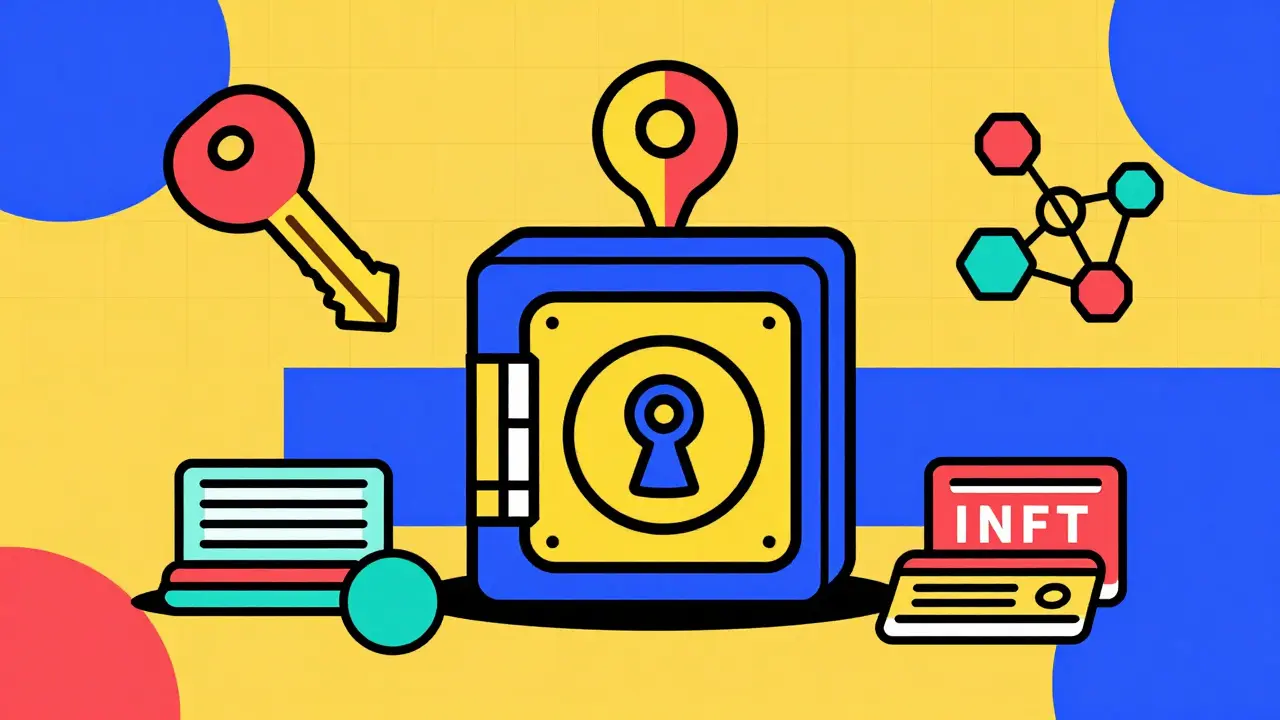
Think of this like a car key. Before Article 12, holding the key (the private key to your wallet) wasn’t legally recognized as owning the vehicle (the digital asset). Now, the law acknowledges that controlling the key gives you significant rights over the asset.
Understanding Controllable Electronic Records
The concept of Controllable Electronic Recordselectronic records subject to control via authorized security measures covers a wide range of assets. We aren’t just talking about Bitcoina decentralized digital currency and payment system or Ethereuma blockchain platform supporting smart contracts and tokens. It also includes NFTs, electronic promissory notes, and tokenized payment rights. However, the definition intentionally avoids listing specific names like “NFT” or “Crypto” in the statute text.
Why leave them unnamed? The lawmakers wanted flexibility. Technology moves faster than legislation. By defining the asset based on the function (“control of an electronic record”) rather than the technology itself, the law remains relevant even as new types of digital tokens emerge in 2027 or 2030. This principle-based approach ensures the framework adapts to innovations like quantum-resistant ledgers or advanced smart contracts without needing immediate re-writing.
There is a catch, though. Not every digital file counts. Electronic copies of documents evidencing chattel paper, investment property, and transferable records under E-SIGN are explicitly excluded. This separation keeps traditional financial instruments separate from modern digital assets.
How Control Changes Ownership Rules
In traditional commercial law, you perfect a security interest (proving you have a right to collateral) by filing a financing statement with a state agency. Article 12 introduces a powerful alternative: perfection by control. If you have control over the CER, you automatically have priority over others who only filed paperwork.
Consider a lender giving you a loan backed by your cryptocurrency holdings. Under the old rules, they relied on you signing a contract. Now, they can demand control. If they have the private keys or custodial access, they win priority over other creditors. This creates a “take-free” rule where a buyer who obtains control in good faith gets the asset free from previous competing claims. It sounds technical, but it means if you buy an NFT from a reputable marketplace, you likely own it clean, even if the seller had hidden debts.
| Method | Priority Level | Risk Factor |
|---|---|---|
| Perfection by Control | Highest | Lender holds custody/access |
| Perfection by Filing | Lower | Vulnerable to take-free claims |
The Nuance of NFT Ownership
NFTs complicate things because they often point to something else. An NFT is technically a controllable electronic record, but it frequently represents rights to underlying intellectual property, real estate deeds, or payment streams. Here is the critical distinction Article 12 makes: having control over the NFT (the record) does not equal having control over the asset it points to (the property).
Let’s say you own an NFT linked to a copyright agreement for a digital song. You control the token on the blockchain. Does that mean the bank taking the NFT as collateral owns the song? No. The bank perfected its interest in the electronic record (the token), but the song itself falls under Copyright Law. Similarly, an NFT representing a deed to a piece of land is governed by real estate law, not the UCC. This separation prevents accidental transfers of complex underlying rights when trading tokens on a public ledger.
This distinction protects buyers and sellers. You don’t accidentally lose your house because you lost the private key to an NFT representing it, unless specific local real estate laws say otherwise. It forces everyone to look at the specific asset type rather than assuming the blockchain handles everything.
State Adoption Landscape in 2026
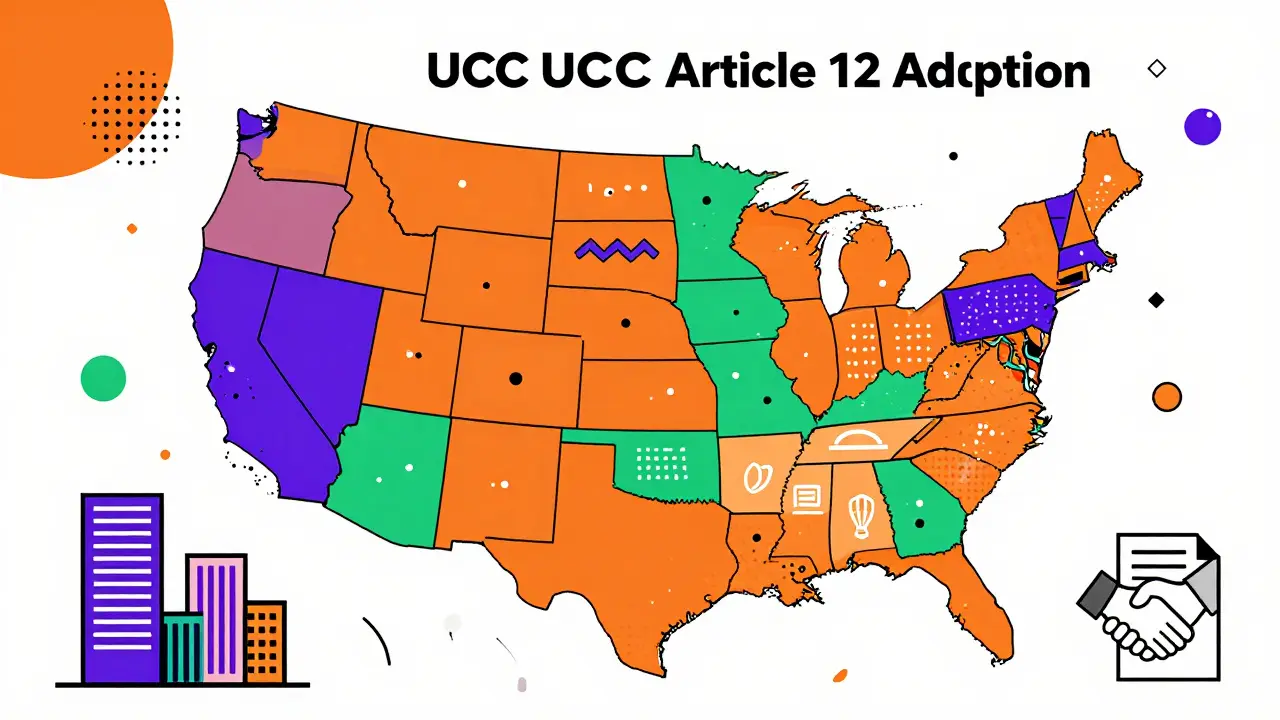
By March 2026, the adoption of these amendments remains uneven across the United States. While more than 29 states have introduced the legislation, full enactment has happened in fewer jurisdictions. As of today, states like NebraskaUS state that adopted UCC Article 12, Iowa, New Hampshire, Indiana, and New York have enacted the changes. New York’s adoption is particularly significant. As a major global financial hub, its decision signals strong acceptance among large commercial centers.
This patchwork system creates challenges for interstate business. If a company in Texas sells an NFT to a buyer in New York, which laws apply? Choice of law provisions in Article 12 help resolve this, but they add complexity. Businesses operating nationally must verify where the transaction takes place and whether the jurisdiction recognizes CERs. In states that haven’t adopted Article 12, parties revert to older interpretations of general intangibles, leaving some legal gaps unresolved.
Benefits for Businesses and Individuals
The primary goal of Article 12 is to provide three things: protection, clarity, and confidence. Protection ensures rights are enforceable in court. Clarity defines exactly what “ownership” means for a file on a server. Confidence encourages companies to build products around these assets without fear of regulatory surprise.
For secured creditors like banks, this means they can finally offer loans backed by digital assets with a clear path to recovery if the borrower defaults. They don’t have to guess if their lien stands up against a bankruptcy trustee. For individuals, it means your purchase history carries more weight. Marketplaces integrating with custody providers can now verify ownership more reliably.
However, the transition isn’t seamless. There are transitional periods for assets previously perfected under Article 9. Creditors holding security interests from before the law changed must act quickly to update their perfection methods or risk losing their priority status to those using the new control mechanisms.
Practical Steps for Asset Holders
If you are dealing with significant digital holdings, here is what you should consider. First, determine if your assets qualify as CERs. Most standard cryptocurrencies do. Complex NFTs representing real-world rights require legal review. Second, if you are lending against these assets, prioritize obtaining control over simply relying on a signed agreement. Custody solutions are safer than paperwork alone.
Finally, monitor your local laws. Just because an asset exists on a global blockchain doesn’t mean local courts treat it the same way everywhere. Knowing whether you are in an adopting state like New York or a non-adopting one helps you plan for potential disputes.
Does UCC Article 12 apply to all digital files?
No. It applies only to electronic records that allow for control, such as cryptographic tokens. Files like emails or PDFs that cannot be controlled in this manner do not qualify as Controllable Electronic Records.
Can I sue for NFT theft under Article 12?
Yes, if your state has adopted the amendment. It provides clearer statutory grounds for claiming ownership and recovering misappropriated electronic records compared to previous common law standards.
Which states have adopted UCC Article 12 as of 2026?
Full adoption is currently confirmed in New York, Nebraska, Iowa, New Hampshire, and Indiana, with several others actively considering legislation.
Does owning an NFT mean I own the copyright?
Not necessarily. Article 12 clarifies that control of the electronic record (NFT) does not automatically grant control over the underlying intellectual property, which remains subject to copyright law.
Is perfection by control better than filing?
Generally yes. Perfection by control grants higher priority. If a conflict arises between a lender with control and one who only filed paperwork, the controller wins.