
Understanding Margin Trading in India: Pledging, Leverage, and Peak Margin Rules
 Feb, 12 2026
Margin trading in India isn’t just about borrowing money to buy stocks. It’s about using what you already own-like shares in your demat account-to unlock more buying power. If you’ve ever seen someone trade 5x their account size in a single day, they’re using margin. But here’s the catch: the rules changed in 2020, and many traders still don’t know how they work today.
What Is Margin Trading?
Margin trading lets you borrow money from your broker to buy more shares than your cash balance allows. In India, you don’t always need cash. You can pledge your existing shares as collateral. For example, if you own 100 shares of Reliance Industries worth ₹200,000, you might be able to borrow up to ₹100,000 against them. That gives you ₹300,000 to trade with-your original ₹200,000 plus ₹100,000 borrowed.
This isn’t free money. You pay interest on the borrowed amount, usually between 10% and 18% annually. But the real power comes from leverage. With leverage, small price moves turn into big gains-or losses. A 5% rise in a stock you bought with 5x leverage means a 25% profit on your own cash. A 5% drop? That’s a 25% loss.
Pledging Shares: The Backbone of Margin in India
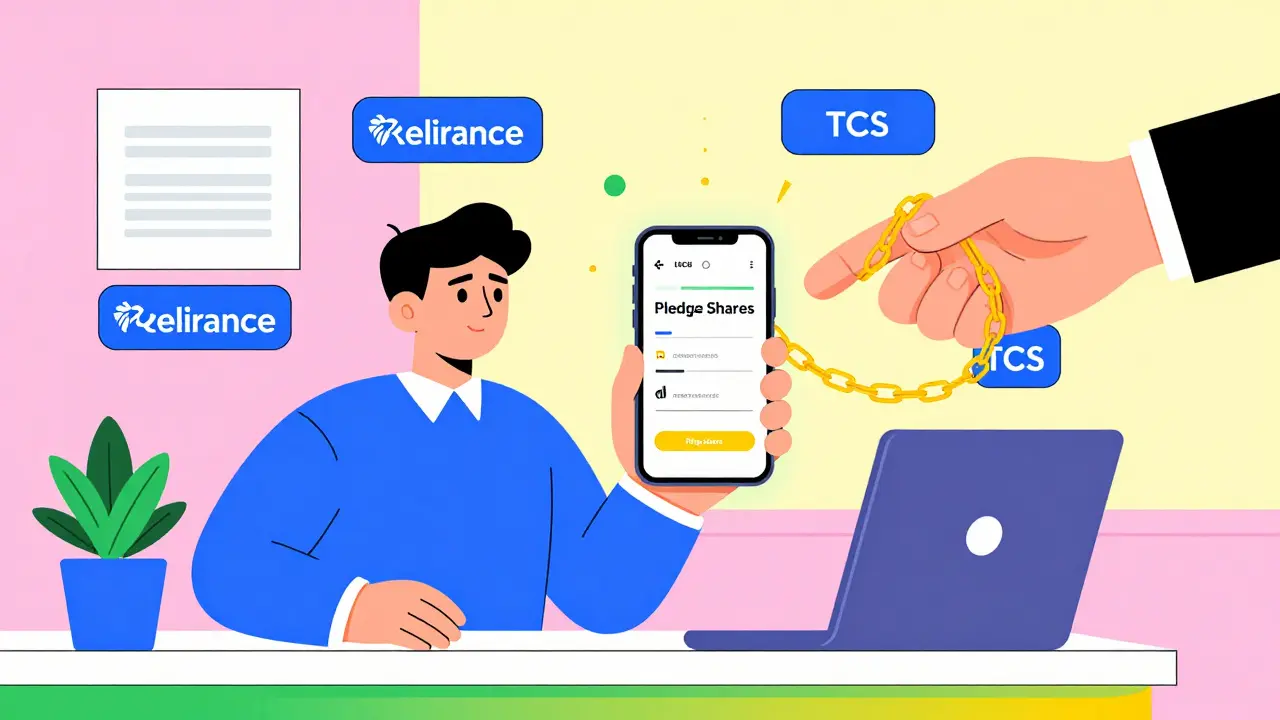
Before 2020, brokers gave you instant margin based on your portfolio. Now, you must explicitly pledge your shares. That means you’re legally giving your broker a lien on them. Until you do, you can’t access any margin.
Here’s how it works:
- You log into your trading app (Zerodha, Upstox, Groww, etc.)
- You select shares from your demat account
- You click “Pledge” and confirm
- The broker locks those shares as collateral
- Only then does your margin limit get updated
Not all shares are equal. Blue-chip stocks like TCS or HDFC Bank give you 70-80% collateral value. Small-cap stocks? Maybe 20-30%. If you pledge 100 shares of a low-value stock, you might get ₹5,000 in margin instead of ₹50,000.
And here’s a hidden rule: you can’t pledge shares that are under litigation, have pending corporate actions, or are part of a lock-in period. Brokers check this automatically, but you should too.
How Leverage Works in India Today
Leverage isn’t fixed. It depends on three things:
- The stock’s volatility
- Your pledged collateral value
- Exchange-set limits
For example, in 2026, the National Stock Exchange (NSE) caps intraday leverage at 5x for most large-cap stocks. For mid-caps, it’s 3x. For small-caps and newly listed IPOs? Often just 1.5x or even 1x.
But here’s what most traders miss: leverage is not the same as margin. Margin is the total amount you can borrow. Leverage is how many times you can multiply your position. If you have ₹100,000 in pledged shares and the broker allows 4x leverage, you can trade up to ₹400,000. But if the stock has a 2x intraday limit, you’re capped at ₹200,000 no matter how much collateral you have.
Some brokers offer overnight margin, but it’s rare. Most margin trades must be squared off by 3:20 PM. If you don’t, the system auto-squashes your position-and you might get hit with extra charges.

Peak Margin Rules: The Big Change
In 2020, SEBI introduced the peak margin rule. Before that, brokers could give you margin based on the highest position you held during the day. Now, they can only give you margin based on what you have at the end of the day.
Here’s the impact:
- Before: You bought ₹500,000 worth of shares with ₹100,000 cash. You sold ₹400,000 worth before market close. Your broker still gave you margin on the full ₹500,000.
- After: You still bought ₹500,000, sold ₹400,000. At 3:20 PM, you only held ₹100,000. So your margin is now based on ₹100,000-not ₹500,000.
This killed the “intraday scalping” strategy that relied on borrowing huge sums during the day and paying back before close. Now, you must have enough collateral at the end of every trading day.
It also means if you’re holding a position overnight, you need to have 100% cash or pledged shares to cover it. No more borrowing against yesterday’s high.
What Happens If You Can’t Meet Margin Requirements?
Brokers monitor your margin daily. If your portfolio value drops and your collateral falls below the required level, you get a margin call.
Here’s the sequence:
- You get an SMS or app alert: “Margin shortfall of ₹15,000. Add funds or pledge more shares.”
- You have until 5:00 PM to fix it.
- If you don’t, your broker starts selling your positions-starting with the most volatile ones.
- You might lose control over which stocks get sold.
- You still owe any remaining deficit.
One trader in Bengaluru lost ₹3.2 lakh in 2024 because he didn’t notice his pledged shares dropped 22% after bad earnings. His broker liquidated his entire position at a loss. He had no cash to cover the gap.
How to Use Margin Safely
Margin isn’t evil. Used right, it can boost returns. Used wrong, it can wipe out years of savings.
Here’s how to stay safe:
- Never use more than 2x leverage unless you’ve traded for at least 2 years
- Pledge only blue-chip stocks-avoid small-caps and crypto-linked ETFs
- Always keep 10-15% cash buffer in your account
- Set stop-losses on every margin trade
- Check your margin status daily before market close
And never, ever use margin to trade on tips from Telegram groups or YouTube influencers. Those trades are designed to fail.

Margin vs. Cash Trading: The Real Difference
Let’s say you have ₹50,000.
Cash trading: You buy 500 shares of Infosys at ₹100 each. If it rises to ₹110, you make ₹5,000. That’s a 10% return.
Margin trading: You pledge ₹50,000 in shares. You get 3x leverage. You buy 1,500 shares of Infosys. Price rises to ₹110. You make ₹15,000. That’s a 30% return on your cash.
But if Infosys drops to ₹90? Cash trader loses ₹5,000 (10%). Margin trader loses ₹15,000 (30%)-and still owes interest on the borrowed ₹100,000.
The math is simple: leverage amplifies everything. Not just gains. Losses too.
What’s Next? The Future of Margin in India
SEBI is testing a new system called real-time margin monitoring. By 2027, brokers may be forced to update your margin limit every 5 minutes-not just at close. That means if your stock drops suddenly, you’ll get a margin call within minutes.
Some brokers are also rolling out AI-based risk alerts. They’ll text you: “Your portfolio is 92% exposed to tech stocks. A 5% tech sell-off could trigger a margin call.”
But the core rules won’t change: you must pledge. You must cover. You must understand leverage.
Final Thought: Margin Is a Tool, Not a Shortcut
Margin trading in India isn’t about getting rich overnight. It’s about using your existing assets smarter. The people who win aren’t the ones who take the biggest risks. They’re the ones who know when to walk away.
Know your collateral. Know your limits. Know your broker’s rules. And never forget: every rupee you borrow costs you something. Interest. Stress. Risk.
Trade smart. Not big.
Can I pledge mutual funds for margin trading in India?
No, you cannot pledge mutual funds for margin trading in India. Only equity shares held in demat form are eligible for pledging. Mutual funds, even ETFs, are not accepted as collateral by brokers under current SEBI rules. If you want to use mutual funds as collateral, you’d need to first redeem them and buy shares with the proceeds.
Do I need to pay interest on margin even if I don’t use it?
No, you only pay interest on the amount you actually borrow. If you pledge shares but don’t place any margin trade, your broker won’t charge you anything. Interest kicks in only when you use the margin to buy stocks. Some brokers show a “available margin” figure, but that’s just your potential limit-not a loan.
What happens if I forget to square off my margin position?
If you don’t square off an intraday margin position by 3:20 PM, your broker will automatically close it. This is called auto-squaring. You might get filled at a worse price than expected, and you’ll still be charged a penalty-usually ₹50 to ₹200 depending on the broker. Some brokers also apply a higher brokerage rate on auto-squared trades.
Can I use margin to trade in futures and options?
Yes, but differently. Margin for F&O trades isn’t based on pledging shares. Instead, brokers use SPAN margin (Standard Portfolio Analysis of Risk) calculated by the exchange. You need to maintain a minimum cash margin based on volatility and contract size. You can’t use pledged shares to cover F&O positions. It’s a separate system.
Is margin trading allowed for NRIs in India?
No, NRIs (Non-Resident Indians) cannot use margin trading in India. They are restricted to cash-only trading in equities. Even if they hold shares in an NRE or NRO demat account, they cannot pledge them for margin. This restriction is enforced by RBI and SEBI to limit foreign exposure to leveraged equity markets.