
Using Flared Gas for Bitcoin Mining: Emissions Reduction and Regulatory Considerations
 Aug, 12 2026
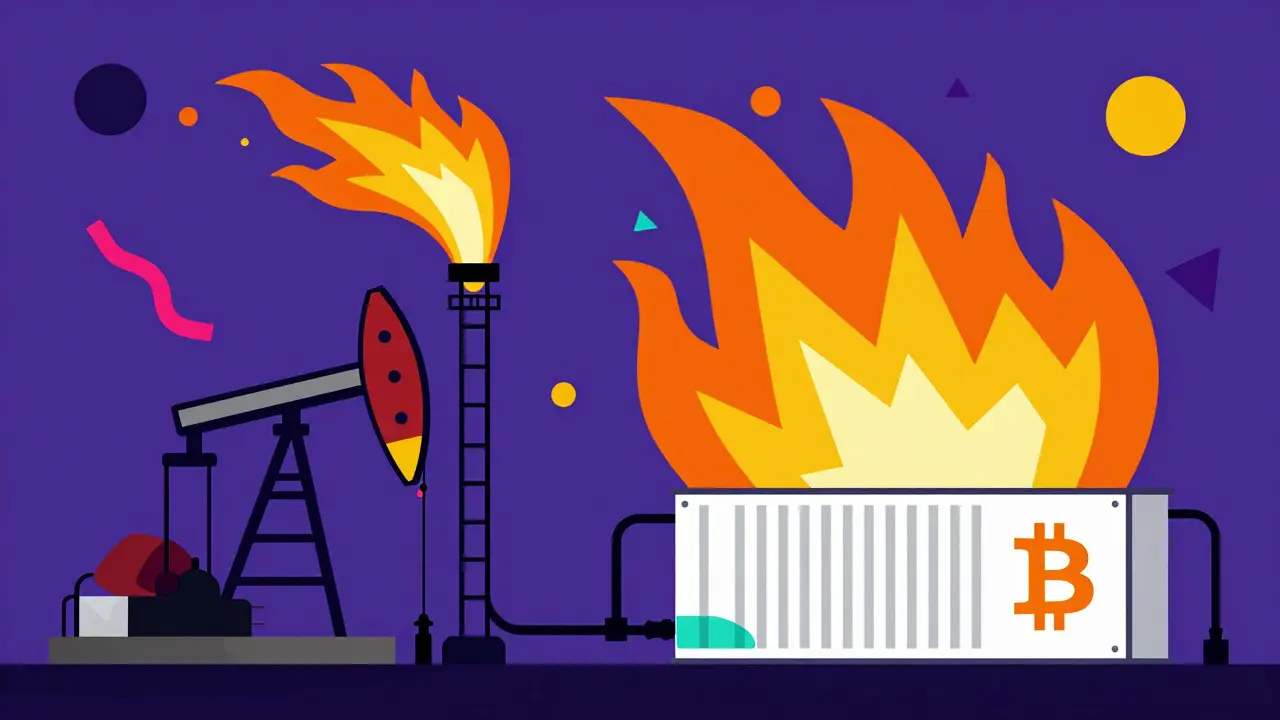
Imagine a remote oil field where flames roar into the night sky, burning off natural gas that is too cheap or difficult to pipe away. For decades, this practice-known as flaring-has been an accepted part of energy production, but it comes with a heavy climate cost. Now, a new industry is stepping in to put that waste to work. Companies are installing modular Bitcoin mining rigs directly at these sites, capturing the gas before it burns and using it to power cryptocurrency networks. This isn't just about making money from digital coins; it is becoming one of the most practical tools available for cutting greenhouse gas emissions right now.
If you have heard debates about whether Bitcoin helps or hurts the planet, the answer often depends on where the electricity comes from. When miners plug into coal-heavy grids, the carbon footprint is high. But when they hook up to stranded gas that would otherwise be vented or flared, the math changes dramatically. By mid-2026, this approach has moved from experimental niche to a serious component of global methane reduction strategies, driven by tightening regulations and proven technology.
How Flared Gas Bitcoin Mining Works
To understand why this matters, you need to look at what happens to "associated gas" at oil wells. When crude oil is pumped out of the ground, natural gas often comes with it. If there is no pipeline nearby to sell that gas, operators have historically burned it off in tall metal stacks called flares. While this prevents the gas from escaping entirely, it is messy and inefficient. Traditional open flares only destroy about 93% of the methane, letting the rest slip out into the atmosphere.
Digital Flare Mitigation (DFM) is a system that captures associated gas from oil wells and uses it to generate electricity for onsite data centers. Instead of sending that gas up a flare stack, pipes route it into generators. These engines burn the gas much more completely than an open flame. According to technical data from companies like Crusoe Energy and INNIO Waukesha, these controlled combustion engines achieve a methane destruction rate of nearly 99.89%.
The electricity generated powers containerized data centers filled with Bitcoin ASIC miners. Because the power is used instantly on-site, there is no need for expensive transmission lines. The entire setup acts as a closed loop: waste gas becomes fuel, fuel becomes electricity, and electricity secures the Bitcoin network while generating revenue for the oil operator. It turns a regulatory headache into a profit center.
The Real Impact on Methane and CO₂ Emissions
The environmental argument for flare-gas mining rests on chemistry. Methane is a potent greenhouse gas. Over a 20-year period, its Global Warming Potential (GWP) is roughly 84 times higher than that of carbon dioxide (CO₂). When you flare gas, you convert some of that methane into CO₂, which is less harmful in the short term, but a lot of methane still escapes.
By capturing that gas and burning it efficiently in a generator, you eliminate almost all the methane slip. The result is a significant drop in total CO₂-equivalent emissions. A joint case study published in June 2025 regarding the Los Toldos Este II field in Argentina illustrates this clearly. The project captured gas previously destined for flaring and routed it to onsite mining operations. The authors estimated that the initiative lowered emissions by approximately 100,000 metric tons of CO₂-equivalent per year. That number includes both the direct CO₂ reduction and the massive benefit of destroying the methane that would have escaped.
| Method | Methane Destruction Efficiency | CO₂-Equivalent Reduction vs. Flaring | Primary Output |
|---|---|---|---|
| Traditional Open Flare | ~93% | Baseline (0% reduction) | Heat/Light |
| Flared Gas Bitcoin Mining | >98% | Up to 70% | Electricity + Revenue |
| Pipeline Connection | N/A (Gas Sold) | High (if displaced fossil fuel) | Sales Revenue |
Critics sometimes argue that burning gas still produces CO₂, so it cannot be considered green. That is true. However, compared to the alternative-venting raw methane or inefficiently flaring it-the climate benefit is substantial. Industry estimates suggest that shifting mining loads to waste-gas sites can reduce CO₂-equivalent emissions by around 25% to 70% relative to open flaring, depending on the specific equipment and baseline conditions.
Regulatory Drivers: Why 2026 Is a Turning Point
Technology alone rarely drives adoption at scale; regulation does. In the United States, the landscape changed significantly with the U.S. Environmental Protection Agency’s (EPA) Standards of Performance for New, Reconstructed, and Modified Sources (NSPS OOOOb), published in March 2024. This rule mandates that oil and gas operators must eliminate routine flaring over a phase-in period ending in 2026.
Under NSPS OOOOb, operators can only continue flaring if they prove it is technically impossible to use the gas for another purpose. Economic arguments-like saying it is cheaper to burn the gas than to build a pipeline-are no longer valid excuses. The rule explicitly allows for "beneficial purposes," which includes using the gas for onsite power generation. While the text does not mention Bitcoin by name, deploying data centers and mining rigs qualifies as a beneficial use because it consumes the gas productively.
This regulatory shift forces operators to make a choice. They can invest millions in building pipelines to distant markets, a process that takes years of permitting and construction. Or, they can deploy modular mining units that can be installed in months. For many remote wells, the latter is the only viable path to compliance. As a result, we are seeing a surge in interest from major energy producers looking to avoid penalties and meet their own net-zero pledges.
Economic Viability and Project Economics
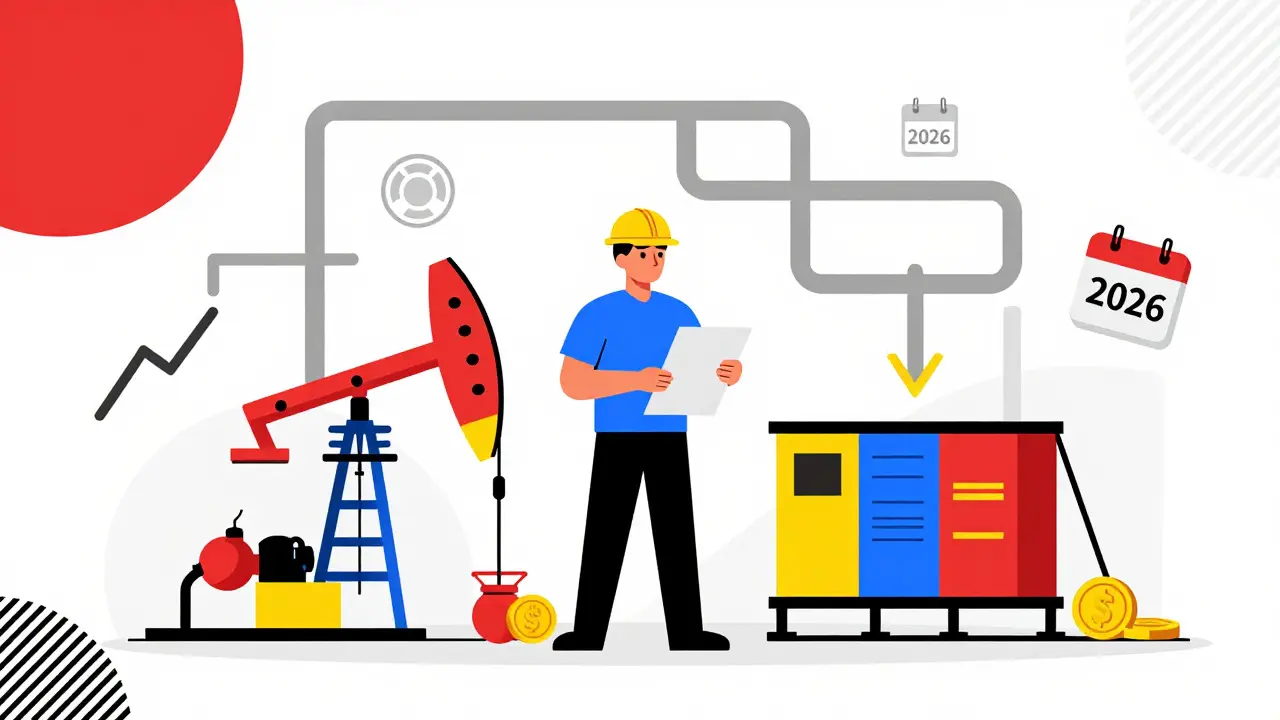
Does it make financial sense? For oil operators sitting on stranded gas, yes. Building a pipeline might cost tens of millions of dollars and take five years to approve. A flare-to-mining solution is far cheaper and faster. According to 2026 industry analyses, a typical 2 MW flare-to-Bitcoin project requires a capital expenditure between US$2 million and US$4 million.
In return, these projects can generate annual net revenues or savings between US$1 million and US$2.2 million, depending on the price of Bitcoin and the efficiency of the hardware. This leads to a simple payback period of just 2 to 4 years. After that, the operation continues to provide value by keeping the well compliant with anti-flaring laws while earning income from block rewards and transaction fees.
For the Bitcoin miners themselves, the advantage is access to extremely cheap, stable power. Grid electricity prices fluctuate and can spike during peak demand. Stranded gas, however, has essentially zero marginal cost since it was going to be wasted anyway. This gives flare-gas miners a competitive edge in securing blocks on the network, especially during periods of high difficulty.
Alternatives and Limitations
Flared gas mining is not a silver bullet, nor is it the only option for handling associated gas. Operators also consider reinjecting the gas back into the reservoir to maintain pressure, producing small-scale liquefied natural gas (LNG), or converting it into hydrogen. Each option has trade-offs.
- Pipeline Connection: Offers the highest economic return if a market exists, but requires massive upfront infrastructure investment and long lead times.
- Reinjection: Good for reservoir management and preventing leaks, but provides no immediate revenue and complex monitoring requirements.
- Hydrogen Production: Emerging technology that could create cleaner fuels, but currently lacks the mature supply chain and immediate profitability of mining.
- Flared Gas Mining: Fast deployment, low capital cost, immediate revenue, and strong emissions reductions, but limited to sites with sufficient gas volume to sustain mining operations.
It is also important to note that this solution works best for "stranded" gas-gas that has no other commercial outlet. If a site already has a pipeline, diverting gas to mining might actually increase overall emissions if that gas displaces renewable energy elsewhere. The greatest climate benefit occurs when mining captures gas that would otherwise be vented or poorly flared.
The Future of Waste-Gas Monetization
As we move through 2026 and beyond, flare-gas Bitcoin mining is likely to become a standard tool in the energy sector's sustainability toolkit. With global commitments to cut methane emissions by 30% by 2030 under agreements like the Global Methane Pledge, governments are incentivizing solutions that deliver quick results. Modular mining systems offer exactly that: rapid deployment and measurable emission cuts.
We may also see hybrid models emerging, where flare-gas facilities combine Bitcoin mining with carbon capture and storage (CCS). In this scenario, the CO₂ produced by the generators is captured and injected back underground, further reducing the carbon intensity of the oil being produced. This creates a circular economy at the wellhead, turning waste into wealth while cleaning up the environment.
For investors, regulators, and environmentalists alike, the message is clear. The era of mindless flaring is ending. Whether through pipelines, reinjection, or digital load, every molecule of associated gas will soon need a purpose. Bitcoin mining has stepped up to fill that gap, proving that digital assets can play a tangible role in solving real-world physical problems.
Is Bitcoin mining using flared gas truly better for the environment?
Yes, compared to traditional flaring. While it still produces CO₂, it destroys nearly 99.9% of methane, which is a far more potent greenhouse gas. Studies show this can reduce CO₂-equivalent emissions by up to 70% compared to open flares, making it a highly effective transitional mitigation strategy.
What is the EPA NSPS OOOOb rule and how does it affect mining?
The EPA NSPS OOOOb rule requires oil and gas operators in the U.S. to eliminate routine flaring by 2026 unless technically infeasible. Using gas for onsite power generation, including Bitcoin mining, counts as a "beneficial purpose," allowing operators to comply with the law without building expensive pipelines.
How much does it cost to set up a flare-gas mining site?
A typical 2 MW system costs between $2 million and $4 million to install. This includes generators, gas handling equipment, and containerized data centers. Most projects see a payback period of 2 to 4 years through mining revenue and avoided flaring penalties.
Can any oil well use this technology?
Not every well. The site needs enough associated gas volume to sustain the power load required for mining. It is most viable for remote or "stranded" fields where building pipelines is economically unfeasible or technically difficult.
Who are the main companies providing this technology?
Key players include Crusoe Energy Systems, EZ Blockchain, and INNIO Waukesha. These companies provide integrated Digital Flare Mitigation (DFM) solutions that handle everything from gas capture to mining hardware management.