
Web3 Advertising: Mastering On-Chain Metrics and Attribution in 2026
 May, 30 2026
Imagine spending thousands on a Twitter ad campaign for your new NFT drop. You see the clicks. You see the impressions. But when you check your wallet dashboard, only three people actually minted. Where did the rest of that money go? In traditional Web2 marketing, this is a common headache caused by broken cookies and opaque algorithms. In Web3 attribution is a marketing analytics methodology that combines blockchain technology with traditional tracking techniques to measure user interactions across both off-chain (Web2) and on-chain (Web3) environments., it’s worse because the trail goes cold the moment a user leaves your website to open their crypto wallet.
We are past the point of guessing. By 2026, the ability to track a user from a social media click all the way to an on-chain transaction isn’t just a nice-to-have; it’s the difference between burning budget and scaling profitably. The old rules of digital marketing don’t apply here. You can’t rely on cookies anymore. Instead, you need to understand how wallet addresses serve as persistent identities and how to interpret the data sitting on the blockchain itself.
The Shift from Cookies to Wallets
For decades, digital advertising ran on cookies. Small text files stored on a user’s browser allowed marketers to follow them around the web. It was effective, but it was also fragile. Privacy regulations like GDPR and CCPA, combined with browsers blocking third-party cookies, shattered this model. Web3 offers a different approach. Instead of tracking a browser session, we track a wallet address is a unique cryptographic identifier used to send, receive, and store cryptocurrency and other digital assets on a blockchain..
A wallet address is persistent. It doesn’t change when a user switches devices or clears their cache. It provides an immutable record of behavior. If a user connects their MetaMask wallet to your site, interacts with your Discord, and then buys a token on Uniswap, that entire journey can be linked back to that single address. This shift solves the privacy paradox: you get rich behavioral data without needing to know the user’s name, email, or physical location. The data is anonymous yet highly specific.
However, this creates a new problem. What about the 70% of visitors who never connect their wallet? They browse your site, read your docs, maybe even join your Telegram, but they remain "anonymous" to your analytics stack. Bridging the gap between these anonymous Web2 interactions and identifiable Web3 actions is the core challenge of modern Web3 advertising.
Key On-Chain Metrics That Actually Matter
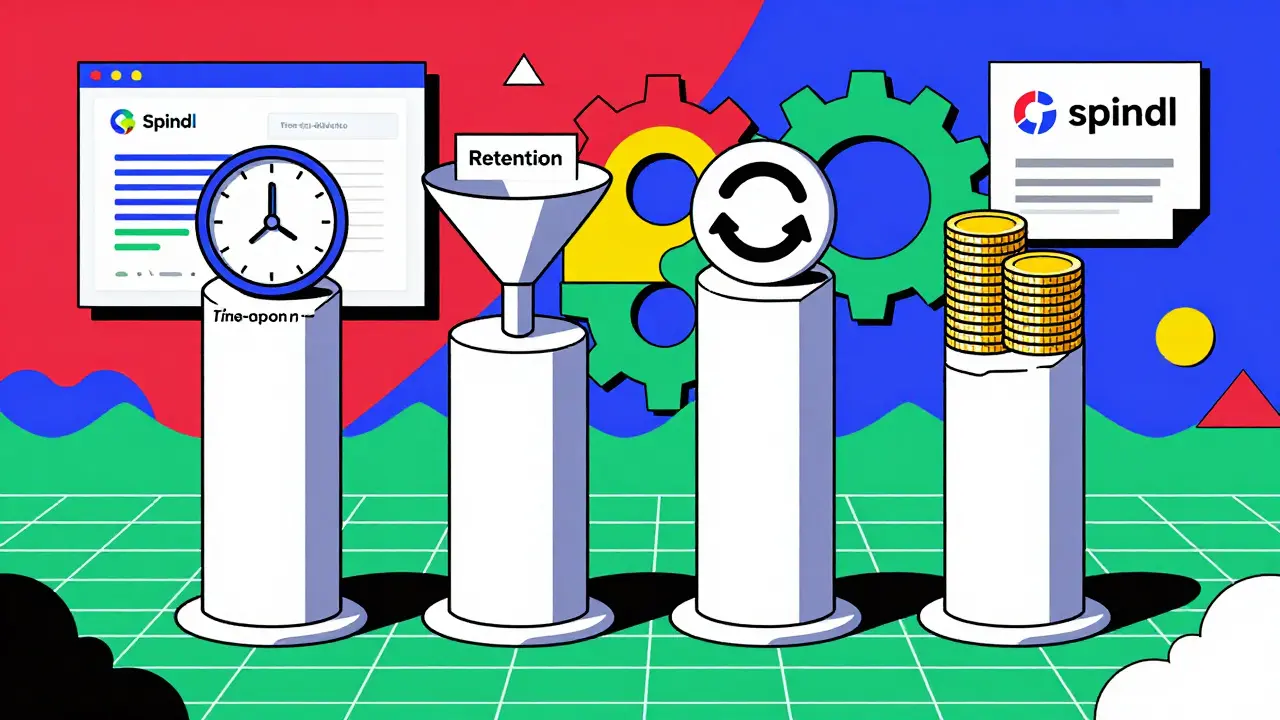
If you’re still looking at "clicks" as your north star metric, you’re missing the picture. On-chain activity requires a different set of KPIs. Here are the four metrics that define success in Web3 campaigns:
- Time-to-Activation: This measures the interval between a user’s first interaction (like clicking an ad) and their first on-chain transaction. Industry benchmarks suggest a median conversion time of roughly 47 hours. If your users are converting in minutes, you might be attracting low-intent speculators. If it takes weeks, your funnel might be too complex.
- Attribution by Channel: Not all traffic is equal. Data shows that referrals from communities like Discord often generate 28% higher conversion rates than broad social media blasts on Twitter. Knowing which channel drives actual wallet connections helps you reallocate budget instantly.
- User Retention Rate: Getting a user to mint once is easy. Keeping them active is hard. Track the percentage of wallets that remain active beyond 30 days. For many NFT projects, the industry average hovers around 18.7%. If you’re below this, your product-market fit needs work, not just better ads.
- Revenue per User (RPU): Calculate the average value generated per wallet. Top-performing campaigns can generate over $42 per wallet, while the industry average sits closer to $12. This metric tells you if your acquisition cost is sustainable.

How Web3 Attribution Tools Work
You can’t build this system alone using basic Google Analytics. You need specialized infrastructure. These platforms operate through a multi-layered architecture. First, they use lightweight SDKs (often just 1-3KB in size) embedded in your website to capture off-chain events. Second, they monitor wallet connection events. Third, they analyze on-chain transactions via indexing services like The Graph is an open protocol for indexing data from blockchains like Ethereum and IPFS. or Dune Analytics is a platform for querying and visualizing blockchain data using SQL..
Finally, a correlation engine maps the off-chain click to the on-chain action. This is where the magic happens. The tool assigns credit to the marketing source that initiated the journey. For example, if a user clicked a Facebook ad, joined your Discord, and then bought a token two days later, the attribution model determines whether Facebook or Discord gets the credit. Most modern tools use multi-touch attribution to share credit fairly across the funnel.
Top Platforms for Web3 Attribution
The market has consolidated into a few key players. Each has strengths depending on your technical resources and budget.
| Platform | Best For | Pricing Model | Key Limitation |
|---|---|---|---|
| Spindl | Multi-touch attribution & advanced targeting | $1,500+/month | Requires technical integration |
| Formo | Non-technical marketers & quick setup | $999+/month | Limited blockchain network support |
| Cookie3 | Predictive analytics & cross-platform data | $2,500+/month | Complex pricing structure |
| Addressable | Web2-to-Web3 conversion tracking | 15-20% of ad spend | High cost for small budgets |
Spindl leads in complexity and power, offering detailed multi-touch attribution. It’s ideal for teams with developers who want granular control. Formo shines in user experience, allowing marketers to set up token-gated forms and track campaigns without writing code. However, if you’re building on Solana or Avalanche, Formo’s limited chain support might be a dealbreaker. Cookie3 brings a unique angle by combining on-chain data with off-chain behavior modeling, making it great for predictive targeting, but it comes at a premium price. Addressable is perfect if your main struggle is connecting traditional ad spend (like Google Ads) to on-chain results, though its revenue-share model can get expensive as you scale.
Common Pitfalls and How to Avoid Them
Even with the best tools, mistakes happen. The biggest issue is the "anonymous visitor" gap. As noted earlier, up to 78% of your traffic may never connect a wallet. If you only track connected wallets, you’re blind to the majority of your audience. To fix this, implement wallet connection prompts strategically. Don’t ask for a connection immediately. Let users engage with content first, then prompt for a wallet connection to unlock exclusive benefits, like early access or discounted mints. This can convert 15-22% of anonymous visitors into trackable users.
Another pitfall is multi-wallet confusion. Power users often have multiple wallets for different purposes (e.g., one for trading, one for holding). Attribution tools use probabilistic matching to link these wallets, but accuracy ranges from 72% to 85%. Accept that some noise will exist. Focus on aggregate trends rather than individual user paths. Finally, beware of "vanity metrics." Just because you have 10,000 wallet connections doesn’t mean you have 10,000 customers. Look at retention and RPU to gauge true health.
Implementing Your First Attribution Strategy
Start simple. Don’t try to boil the ocean. Follow these steps to get started:
- Choose One Platform: Pick a tool that fits your tech stack. If you have developers, Spindl or Cookie3 might offer more depth. If you’re a solo marketer, Formo is likely easier to onboard.
- Tag Your Campaigns: Ensure every off-channel link uses UTM parameters. This allows the attribution engine to match the initial click to the later wallet connection.
- Integrate the SDK: Add the lightweight tracking script to your website. This usually takes 2-5 developer hours.
- Define Conversion Events: Decide what counts as a "conversion." Is it a mint? A swap? A governance vote? Configure your tool to track these specific smart contract interactions.
- Analyze and Iterate: Review your data weekly. Cut channels with high cost-per-acquisition and double down on those with high retention.
Expect a learning curve. The first month will feel messy. You’ll see discrepancies between your ad platform’s reported clicks and your on-chain conversions. This is normal. Trust the on-chain data-it’s immutable. Use the off-chain data to optimize your creative and targeting, but let the blockchain tell you who actually paid.
Is Web3 attribution compliant with GDPR?
Yes, generally. Because wallet addresses are pseudonymous and do not contain personal identifiable information (PII) like names or emails, they fall outside the strictest definitions of personal data under GDPR. However, if you link wallet activity to email addresses or other PII, you must comply with standard privacy regulations.
Can I track users who don't connect their wallets?
Not directly. Traditional Web3 attribution relies on wallet connections. However, some platforms like Addressable use probabilistic modeling to estimate the behavior of anonymous users based on aggregated data, but this is less accurate than direct wallet tracking.
What is the typical cost of Web3 attribution software?
Pricing varies widely. Entry-level plans start around $999/month for startups. Enterprise solutions can exceed $5,000/month or take a percentage of ad spend (15-20%). Factor in potential developer costs for integration, which can range from $2,000 to $10,000 depending on complexity.
How accurate is multi-wallet attribution?
Current probabilistic matching algorithms achieve 72-85% accuracy in linking multiple wallets to a single user. This means there is a margin of error, so focus on macro-trends rather than micro-attribution for individual users.
Do I need a developer to set up Web3 attribution?
Ideally, yes. While platforms like Formo aim for no-code setups, integrating SDKs, configuring smart contract event listeners, and ensuring proper UTM tagging usually require technical expertise. Expect to allocate 2-5 developer hours for basic setup.