
What Is an Oracle in Blockchain Technology? A Beginner's Guide
 Nov, 5 2026
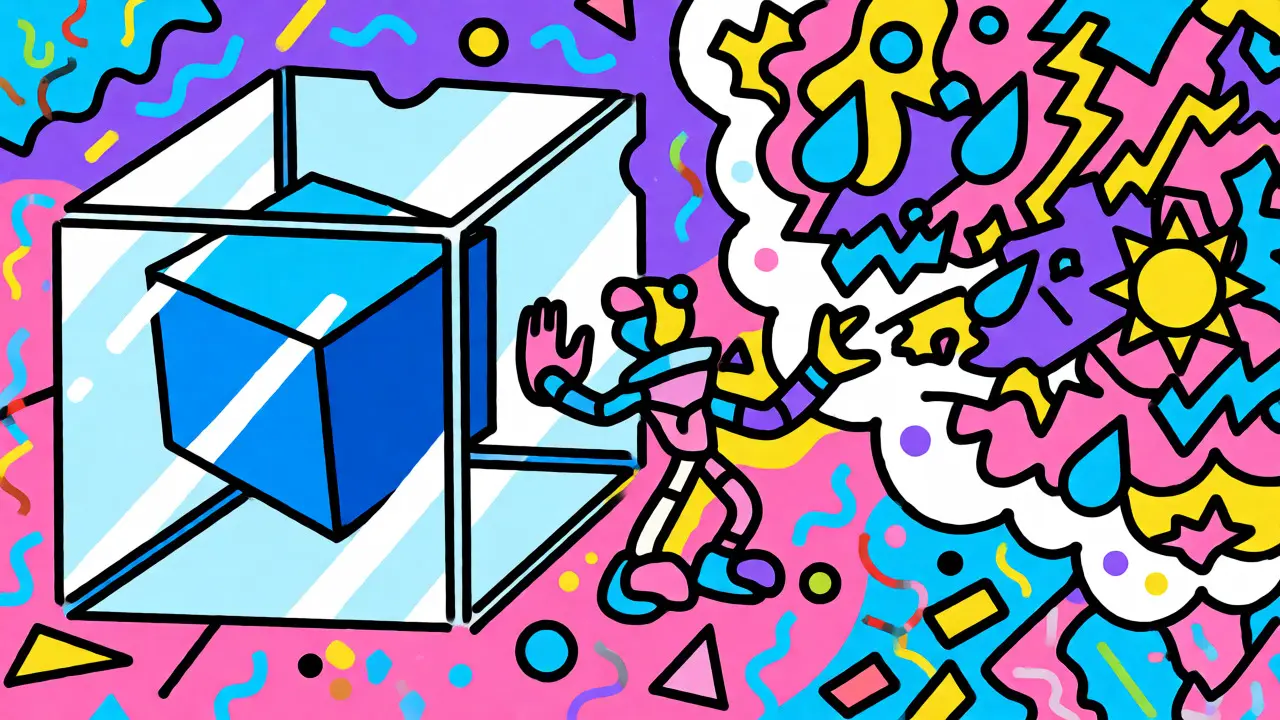
Imagine you write a smart contract that pays out insurance if it rains in Manchester tomorrow. The code is perfect. The logic is sound. But here’s the catch: your blockchain lives in a sealed digital vault. It cannot look out the window. It cannot check a weather app. It doesn’t know if it’s raining or shining. This isolation is a feature, not a bug-it keeps blockchains secure and deterministic. But it creates a massive gap between on-chain code and off-chain reality. That’s where an oracle comes in.
An oracle isn’t a mystical predictor of the future. In blockchain technology, an oracle is middleware software that fetches external data, verifies it, and feeds it into smart contracts. Without oracles, decentralized finance (DeFi) would be blind. Lending platforms wouldn’t know the price of Bitcoin to calculate collateral ratios. Prediction markets couldn’t settle bets on sports games. This guide breaks down exactly how these bridges work, why they’re risky, and which ones power the systems you use today.
The Core Problem: Why Blockchains Need Data Bridges
Blockchains are deterministic state machines. If you give them the same input, they will always produce the same output across every node in the network. This consistency is vital for security. If one node thinks Ethereum is worth $3,000 and another thinks it’s worth $3,500 because of a delayed API call, the network forks. Chaos ensues.
To prevent this, blockchains deliberately isolate themselves from the outside world. They can read their own ledger-balances, transaction history, previous states-but they cannot natively query a website, read a sensor, or check a bank balance. This limitation is known as the Oracle Problem. It’s the challenge of transferring real-world information into a trustless environment without introducing a single point of failure or manipulation.
Think of it like a courtroom. The judge (the smart contract) knows the law perfectly. But the judge needs evidence from the outside world (was the defendant at the scene?). You need a witness. But who do you trust? If you rely on one witness, they might lie. If you rely on ten witnesses who all saw the same blurry video, they might all be wrong together. Oracles attempt to solve this by aggregating multiple sources and using cryptographic proofs to ensure integrity.
How Oracles Actually Work
You might think an oracle is just a bot running a script. While simple implementations exist, robust oracle networks operate through a multi-step process designed to minimize error and manipulation. Here is the typical lifecycle of a data request:
- Request: A smart contract on-chain emits an event asking for specific data, such as "ETH/USD price."
- Fetch: Off-chain nodes (operators) see this request. They pull data from various sources-exchanges like Coinbase or Binance, APIs like CoinGecko, or even traditional financial institutions.
- Aggregate: This is the critical step. Instead of picking one number, the network calculates a median or weighted average of all fetched values. This filters out outliers and spoofed prices.
- Verify: Nodes sign the aggregated data with their private keys. Some advanced systems use Trusted Execution Environments (TEEs) or Zero-Knowledge Proofs to prove the data wasn’t tampered with during processing.
- Broadcast: The verified data is submitted back to the blockchain in a transaction. The smart contract reads this value and executes its logic based on it.
This process introduces latency. Unlike reading a local variable, fetching off-chain data takes time. For high-frequency trading, this delay matters. For settling a weekly insurance claim, it doesn’t. Understanding this trade-off between speed and security is key to choosing the right oracle.
Main Types of Blockchain Oracles
Not all oracles are created equal. Developers classify them based on direction, source, and trust model. Knowing these categories helps you assess risk when interacting with a new protocol.
| Type | Data Direction | Trust Model | Best Use Case |
|---|---|---|---|
| Centralized | Off-chain to On-chain | Single entity controls the feed | Simple dApps, low-value transactions |
| Decentralized Network | Off-chain to On-chain | Multiple independent operators | DeFi lending, derivatives, high-value assets |
| First-Party | Provider to On-chain | Data provider operates their own node | High-fidelity financial data (e.g., Pyth) |
| Input | External → Blockchain | Varies | Price feeds, weather data, sports results |
| Output | Blockchain → External | Varies | Triggering bank payments, IoT actions |
Chainlink is the most prominent example of a decentralized oracle network. Founded in 2017, it uses dozens of independent node operators to aggregate data from multiple exchanges. Its mainnet launched in 2019, and it now secures billions of dollars in DeFi protocols. By requiring nodes to stake LINK tokens, Chainlink adds economic penalties for bad behavior, though this doesn’t eliminate the risk entirely.
On the other hand, Pyth Network took a different approach. Launched on Solana in 2021, Pyth focuses on first-party data. Instead of scraping public APIs, it gets data directly from market makers and exchanges like Jane Street or Kraken. These providers run their own oracle nodes. This reduces intermediary risks but requires trusting the major financial players involved.
API3 also champions a first-party model with its Airnode software. It allows API providers to deploy their own serverless oracle infrastructure, removing the middleman entirely. This appeals to enterprises that want direct control over their data integrity.
Real-World Applications Beyond Prices
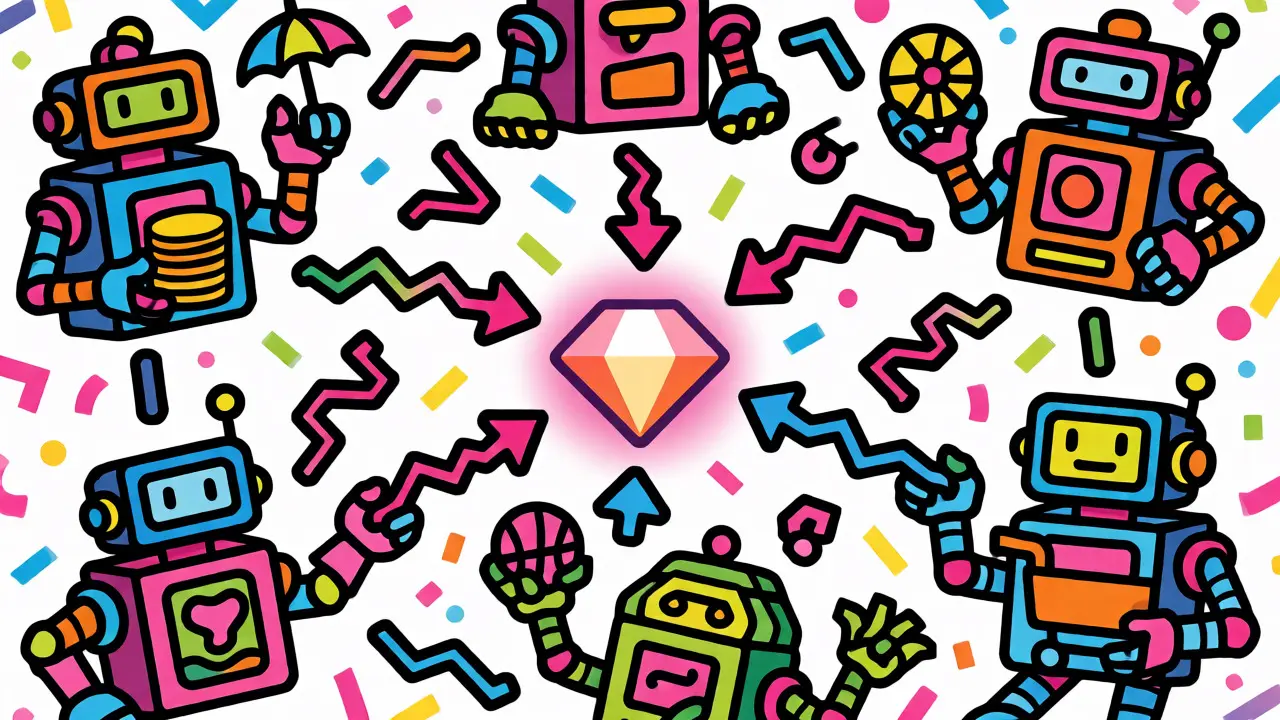
While price feeds dominate the conversation, oracles do much more. Every time you interact with a modern dApp, you’re likely relying on oracle data.
- Lending Protocols: Platforms like Aave or Compound use price feeds to determine if your loan is healthy. If the price of your collateral drops below a certain threshold, the oracle triggers a liquidation. If the oracle reports a fake price drop, you could lose your assets unfairly.
- Prediction Markets: Polymarket or Augur need to know who won the Super Bowl. Human oracles or specialized data providers resolve these outcomes. Disputes often arise here, highlighting the difficulty of defining "truth" for complex events.
- Gaming: Games like Axie Infinity need verifiable randomness to loot boxes or card draws. Oracles provide random numbers that players can trust weren’t manipulated by the game developer.
- Insurance: Parametric insurance contracts pay out automatically based on data. If an oracle confirms wind speeds exceeded 100mph in Florida, the payout happens instantly. No claims adjuster needed.
These examples show that oracles expand smart contracts from simple scripts into complex systems that interact with capital markets, logistics, and physical events.
The Security Risks: When Oracles Fail
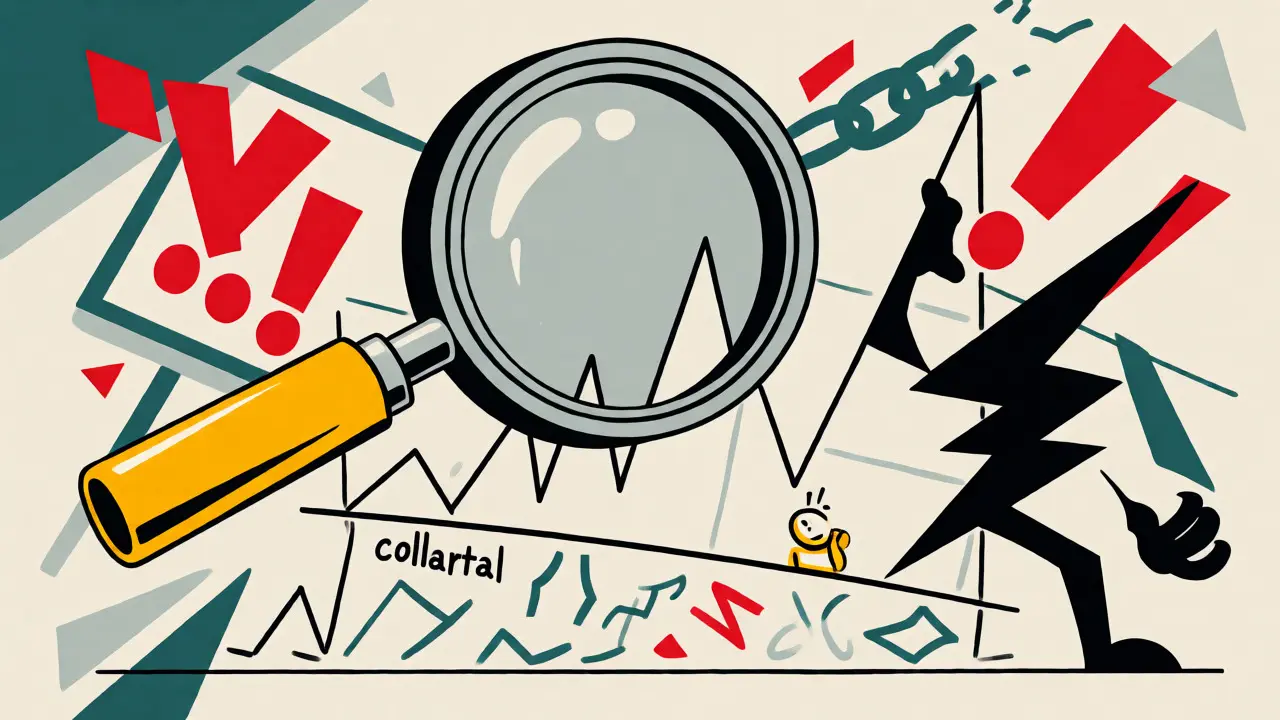
Here’s the uncomfortable truth: decentralizing the oracle software does not decentralize the underlying fact. If ten nodes all pull data from the same compromised exchange, you get ten identical wrong answers. This is called correlated failure.
History has shown us what happens when this goes wrong. In February 2020, bZx suffered two exploits totaling around $1 million. Attackers used flash loans to manipulate the price on Uniswap V1, which bZx was using as its sole price source. Because the liquidity was thin, a small amount of buying pushed the price up artificially. The oracle reported this inflated price, allowing attackers to borrow against worthless collateral. The system worked exactly as coded, but the data source was flawed.
Similarly, in October 2022, Mango Markets was hit by a massive exploit. An attacker manipulated the MNGO token price on a thin market, inflating their collateral value. This allowed them to borrow approximately $114 million. While they eventually returned some funds, retaining about $47 million, the incident proved that an oracle can be technically operational while economically unsafe.
Key vulnerabilities include:
- Stale Data: If the oracle updates too slowly, it might miss a market crash. During the May 2021 crypto crash, some feeds lagged, leading to incorrect liquidations.
- Source Manipulation: As seen with bZx, low-liquidity markets are easy to spoof.
- Oracle Downtime: If the oracle network goes offline, smart contracts may freeze or revert transactions.
- Configuration Errors: Developers might set the wrong deviation threshold or heartbeat interval, causing the feed to update too rarely or too frequently.
Choosing the Right Oracle: A Developer’s Checklist
If you’re building a dApp, don’t just plug in the first price feed you find. Treat the oracle as a security-critical dependency. Ask these questions:
- What is the value at risk? High-value loans need robust, decentralized networks like Chainlink. Low-value gaming rewards might tolerate centralized feeds.
- How fresh does the data need to be? Does your contract need sub-second updates? Or is hourly sufficient? Streaming oracles cost more gas than batch-updated feeds.
- Are the sources independent? Check if the oracle pulls from multiple uncorrelated exchanges. If all nodes scrape the same three websites, you have a single point of failure.
- What is the fallback mechanism? What happens if the oracle returns zero or stale data? Your smart contract should have circuit breakers to pause operations rather than executing on bad data.
- Is the feed audited? Look for third-party audits of both the oracle network and the specific integration in your contract.
Remember, no oracle guarantees absolute truth. It guarantees that a specific method was followed to retrieve and verify data. Your job is to understand those assumptions.
The Future of Oracles
As of late 2026, the oracle landscape is evolving rapidly. We are moving beyond simple price feeds toward more sophisticated infrastructure.
Verifiable Computation: Projects are exploring ways to prove that off-chain calculations were performed correctly without revealing the inputs. This enables privacy-preserving oracles for enterprise use cases.
Cross-Chain Interoperability: With users spread across Ethereum, Solana, Arbitrum, and Base, oracles are becoming essential for cross-chain messaging. They don’t just bring data; they bring state from one chain to another.
Real-World Assets (RWA): As tokenization grows, oracles must attest to the status of physical assets. Did the gold arrive at the warehouse? Is the treasury bond still valid? New attestation models are emerging to handle these legal and physical checks.
The consensus among experts is clear: oracles are necessary infrastructure, but they enlarge the trust boundary of smart contracts. You aren’t just trusting the blockchain anymore; you’re trusting the oracle network, its data sources, and its operators. Always model this risk explicitly in your threat analysis.
Why can't smart contracts access the internet directly?
Smart contracts run on thousands of computers worldwide. If each computer tried to fetch data from the internet independently, they might get slightly different results due to timing differences or network issues. This would cause the network to disagree on the state of the blockchain, breaking consensus. Oracles solve this by fetching data once off-chain, verifying it, and submitting a single agreed-upon value to the chain.
Is Chainlink the only reliable oracle?
No. While Chainlink is the largest and most widely adopted decentralized oracle network, alternatives like Pyth Network, API3, Band Protocol, and Tellor serve different needs. Pyth offers faster, first-party financial data. API3 emphasizes direct provider operation. Reliability depends on your specific use case, required latency, and acceptable trust assumptions.
What is the "Oracle Problem"?
The Oracle Problem refers to the difficulty of providing accurate, timely, and tamper-proof external data to a blockchain. Since blockchains cannot access off-chain data natively, they rely on oracles. However, if the oracle provides incorrect data, the smart contract will execute incorrectly, potentially leading to significant financial losses. It highlights the tension between blockchain determinism and real-world uncertainty.
Can oracles be hacked?
Yes. Oracles can be exploited through various methods, including manipulating the underlying data sources (like thin liquidity pools), compromising the oracle nodes, or exploiting bugs in the aggregation logic. Historical incidents like the bZx and Mango Markets exploits demonstrate that even decentralized systems can fail if the data sources are vulnerable or poorly diversified.
Do I need to pay for oracle services?
It depends. Consuming existing public feeds (like ETH/USD on Chainlink) usually costs only the gas fees for the transaction that reads the data. However, custom requests, high-frequency updates, or dedicated enterprise solutions may require subscription fees, token payments, or higher operational costs. Always check the provider’s current pricing documentation.