
Public Keys, Private Keys, and Wallet Addresses: How Crypto Ownership Works
 Apr, 25 2026
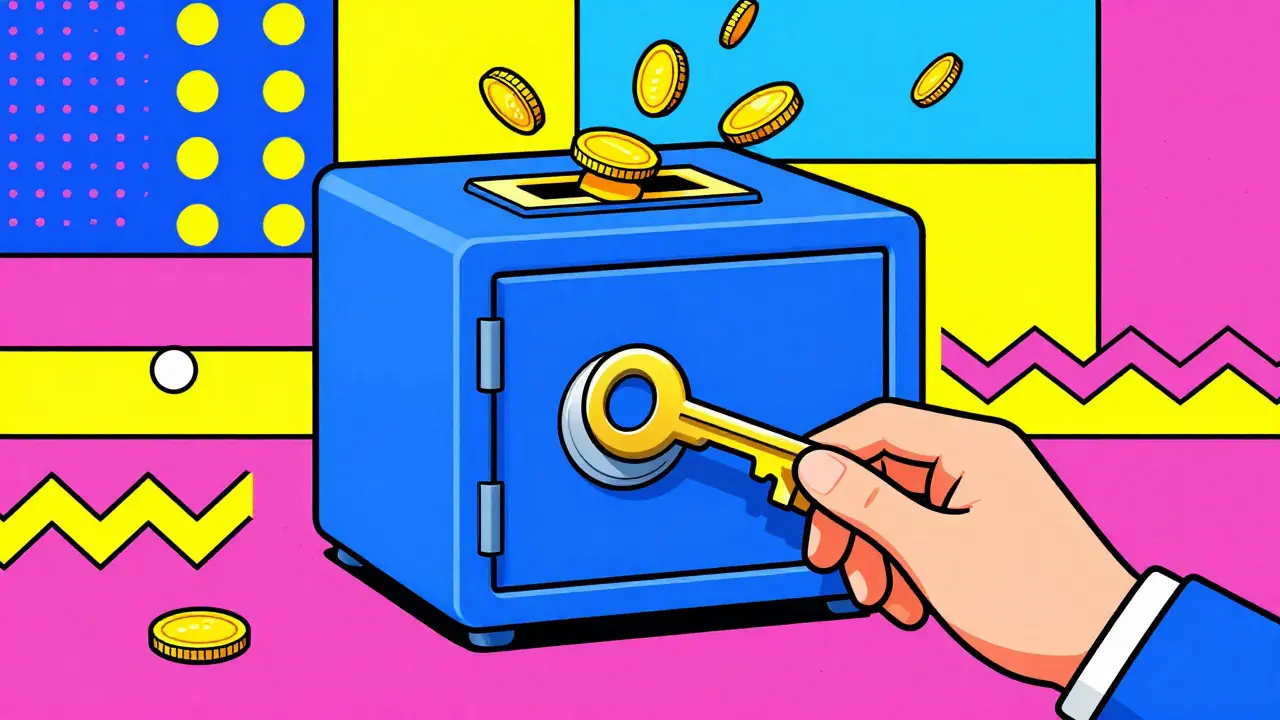
Imagine you have a high-tech safe in a public square. Everyone can see the safe, and anyone can drop a gold coin through a slot in the top. But there is only one person in the world who holds the physical key to open that safe and take the coins out. In the world of blockchain, that safe is your wallet address, and the key in your pocket is your private key. If you lose that key, the gold stays in the safe forever; if someone steals it, the gold is theirs. This is the brutal, uncompromising reality of private key ownership.
The Core Trio: Private Keys, Public Keys, and Addresses
To understand how you actually "own" a digital coin, you have to stop thinking of a wallet as a digital purse that holds coins. In reality, the coins live on the blockchain. Your wallet is simply a tool that manages your cryptographic keys. At the heart of this system is Asymmetric Cryptography is a security system that uses a pair of mathematically linked keys-one public and one private-to encrypt and decrypt data . This ensures you can receive money without giving away the power to spend it.
Here is how the three components break down:
- The Private Key: A massive, randomly generated number. Think of this as your master password. It is the only way to authorize a movement of funds.
- The Public Key: Derived from the private key. It is like your bank account number. It allows the network to verify that a transaction was signed by the correct private key without ever seeing the private key itself.
- The Wallet Address: A hashed, shortened version of the public key. This is the string of characters (like 0x... or 1...) that you actually share with people so they can send you funds.
How Your Wallet is Born: The Generation Process
When you click "Create Wallet," a complex chain reaction happens in milliseconds. First, the software uses a true random number generator to create your Private Key is a secret alphanumeric string that provides total control over cryptocurrency funds associated with a specific address . This is the root of everything. From this single number, the wallet uses a one-way mathematical function to produce the public key.
Crucially, this is a one-way street. You can easily turn a private key into a public key, but it is mathematically impossible to reverse the process. Even with the most powerful supercomputers on earth, you cannot "guess" a private key by looking at a public key. To make this manageable for humans, the public key is further processed through a hashing algorithm to create the Wallet Address is a compressed, alphanumeric identifier that serves as the public-facing destination for blockchain transactions .
| Feature | Private Key | Public Key | Wallet Address |
|---|---|---|---|
| Visibility | Strictly Secret | Public/Shared | Public/Shared |
| Primary Role | Spending/Signing | Verification | Receiving Funds |
| Analogy | Physical Key/Password | Account Details | Email Address |
| Risk if Lost | Total Loss of Funds | No Fund Loss | No Fund Loss |
The Digital Signature: How Transactions Actually Happen
When you send 0.1 BTC to a friend, you aren't sending a file. You are broadcasting a message to the network that says, "I, the owner of Address A, authorize the movement of 0.1 BTC to Address B." But how do the computers (nodes) on the network know it's actually you?
This is where the digital signature comes in. Your wallet uses your private key to create a mathematical "fingerprint" for that specific transaction. This signature is unique to that transaction; if you changed the amount by even one cent, the signature would become invalid. You then broadcast this signed message along with your public key.
The network nodes use your public key to verify the signature. They don't need to see your private key to know the signature is authentic. If the math checks out, the transaction is added to the block. It's a brilliant loop: you prove you own the money by providing a mathematical proof that only someone with the private key could have created, yet you never expose the key itself.
Seed Phrases: The Safety Net for Your Keys
Dealing with 64-character hexadecimal strings is a nightmare for humans. That is why most wallets use a Seed Phrase is a sequence of 12 to 24 random words that acts as a human-readable backup for one or more private keys . This is essentially a mnemonic representation of your master private key.
A seed phrase is incredibly powerful because it can manage multiple accounts. While one private key controls one specific address, a single seed phrase can generate a whole tree of private keys. If you delete your wallet app or break your phone, entering these 12 or 24 words into a new wallet restores every single private key and address associated with that seed. This is why security experts tell you to write your seed phrase on paper and hide it-not store it in a screenshot or an email where a hacker could find it.
Custodial vs. Non-Custodial Ownership
There is a massive difference between having an account on an exchange and having your own wallet. When you keep your funds on a centralized exchange, you are using a custodial service. In this scenario, the exchange holds the private keys. You login with a username and password, but the actual cryptographic ownership belongs to the company. If the exchange freezes your account or goes bankrupt, you cannot move your funds because you don't have the keys.
Non-custodial ownership happens when you use a Hardware Wallet is a physical device that stores private keys offline, isolating them from internet-connected threats like Trezor or Ledger. These devices keep your private keys in a "cold" environment, meaning they never touch the internet. Even when you sign a transaction, the private key stays inside the device; only the completed digital signature is sent to the computer. This removes the risk of malware stealing your keys from your laptop's memory.
Can someone find my private key if they have my wallet address?
No. The process of creating a wallet address from a private key uses a one-way cryptographic hash. While you can easily derive an address from a key, reversing that process to find the private key would take billions of years with current computing power.
What happens if I lose my seed phrase?
If you lose your seed phrase and your wallet device/app is wiped, your funds are gone. There is no "forgot password" button in decentralized finance because there is no central company that holds a backup of your keys.
Is a public key the same as a wallet address?
Not exactly. The public key is a long string of code used for verification. The wallet address is a further compressed and hashed version of that public key, designed to be shorter and easier to share without errors.
Can I change my private key for an existing address?
No. A wallet address is mathematically tied to one specific private key. If you want a new private key, you must generate a new address and move your funds to it.
Why are hardware wallets safer than software wallets?
Software wallets store keys on a device connected to the internet (hot wallets), making them vulnerable to phishing and malware. Hardware wallets keep the keys offline, so the private key never leaves the physical chip.