
Crypto Advertising Rules: What You Can and Can't Say in 2025
When you see an ad saying crypto advertising rules, the legal guidelines that control how digital currencies can be promoted to the public. Also known as cryptocurrency marketing regulations, these rules exist because too many ads promised guaranteed returns, hid risks, or outright lied. If you’re running a crypto project, working for an exchange, or just trying to understand why some ads vanish overnight—this is what you need to know.
Platforms like Google, Meta, and YouTube don’t just make up rules—they follow global standards. In the EU, MiCA, the Markets in Crypto-Assets Regulation that sets clear advertising limits across member states requires all crypto ads to include risk warnings. In India, the 30% tax on crypto gains means ads can’t imply tax-free profits. Even in the U.S., the FTC and SEC have cracked down on influencers who didn’t disclose paid promotions. These aren’t suggestions—they’re legal requirements with real penalties.
What’s banned? Phrases like "guaranteed returns," "risk-free investment," or "get rich quick" with crypto. You can’t use fake testimonials, misleading charts, or celebrity endorsements without clear disclaimers. Even using terms like "stable" for a token without explaining how it’s backed can trigger enforcement. On the flip side, you’re allowed to explain how a blockchain works, list real features, or compare transaction speeds—as long as you don’t oversell. The line isn’t blurry if you stick to facts, not hype.
And it’s not just about words. Visuals matter too. Flashing green arrows pointing up, people celebrating with stacks of cash, or animations of coins multiplying—these all get flagged. Regulators look at the overall impression, not just the fine print. A single misleading image can get your entire campaign pulled, even if the text was technically okay.
What’s changing fast? In 2025, regulators are demanding that ads link directly to official risk disclosures—not just a tiny footnote. Some countries now require ads to include a unique ID number tied to the promoter or company. If you’re a small business or startup, you can’t hide behind "we’re just a team"—you’re accountable. The same rules apply whether you’re a billionaire founder or a solo developer.
There’s no way around it: if you’re promoting crypto, you need to treat advertising like compliance, not marketing. The good news? Clear, honest ads actually build trust. People are tired of scams. They’re looking for transparency—not glitter. The best-performing crypto ads today don’t promise moonshots. They explain use cases, link to whitepapers, and state risks upfront. That’s not boring—it’s smart.
Below, you’ll find real examples of how crypto projects got into trouble, what they did right, and how to avoid the same mistakes. No fluff. Just what works—and what gets you banned.
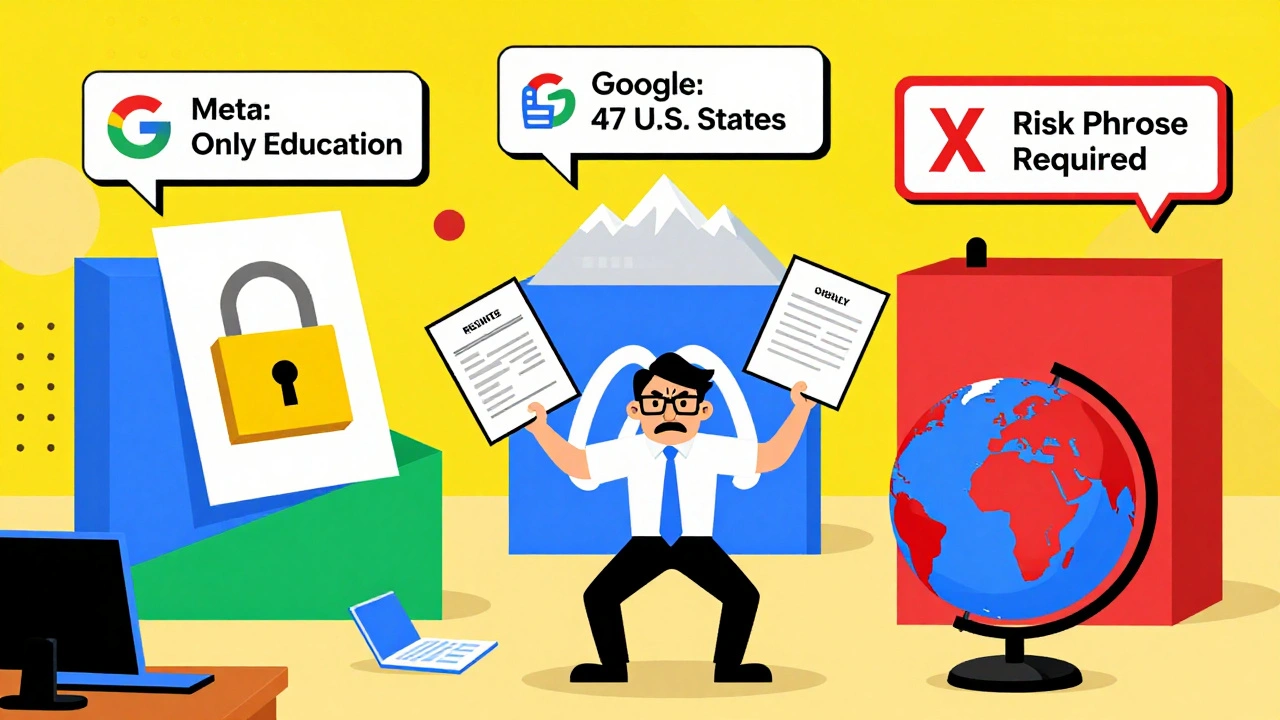
Advertising Rules for Crypto: Disclosures and Jurisdictions
Crypto advertising rules vary wildly by platform and country. Learn the exact disclosures required by Google, Meta, and X in 2025, plus how U.S. state laws and global regulations like MiCA impact your campaigns.
Categories
- Cryptocurrency
- Careers & Education
- Home & Living
- Technology
- Home & Lifestyle
- hire domestic help in Mumbai
- hire drivers in mumbai
- Personal Finance
- hire pet care in mumbai
- Travel & Transportation