
PPF Maturity: What Happens When Your Public Provident Fund Ends
When your PPF maturity, the point when your Public Provident Fund account reaches its full 15-year term and stops earning interest. Also known as PPF closure, it’s when your savings stop growing but become fully accessible without tax penalties. Many people think PPF just ends and the money disappears—but it doesn’t. You get to keep every rupee you put in, plus all the interest earned, tax-free. That’s the power of PPF: it’s not just a savings tool, it’s a long-term wealth builder designed for Indian households.
What happens next depends on what you choose. You can withdraw the full amount, or extend the account in blocks of five years without adding new money. If you extend, the balance keeps earning interest—still tax-free—and you can even make partial withdrawals each year. This flexibility is why so many retirees in India rely on PPF as their main income source. The PPF interest rate, the annual return set by the Indian government and revised quarterly is usually higher than bank FDs, and it’s backed by the government, so there’s zero risk of loss. And unlike other investments, the entire amount—contributions, interest, and withdrawal—is completely exempt from tax under Section 80C and Section 10(11).
But here’s the catch: if you don’t plan ahead, you might miss out. Some people panic and withdraw everything at once, losing the chance to keep earning interest. Others forget to renew the account on time and end up with a dormant account, which delays access. And if you’re still contributing after 15 years, you need to know how the extension rules work. The PPF withdrawal, the process of accessing your funds after maturity, with specific rules on timing and limits isn’t automatic—you have to submit Form G, along with your passbook and ID proof. It’s simple, but if you skip the paperwork, your money stays locked.
PPF isn’t just for retirement. Many families use it to save for a child’s education, a home down payment, or even medical emergencies. Because it’s locked for 15 years, it forces discipline. But when it matures, that discipline pays off in cash you can actually use. Whether you’re 30 and just starting your first PPF account, or 55 and watching it grow, understanding PPF maturity means you control your money—not the system.
Below, you’ll find real guides from people who’ve gone through PPF maturity in India—how they planned, what they did with the money, and what mistakes they avoided. No theory. No fluff. Just what worked.
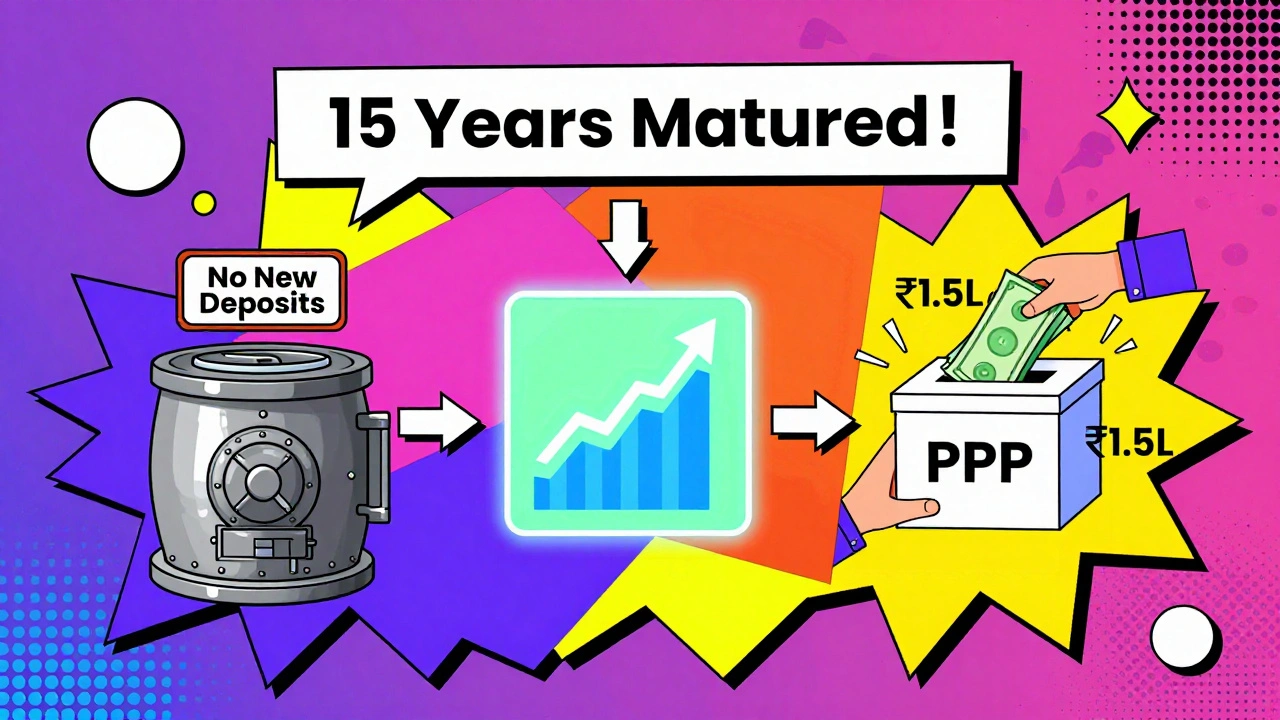
PPF Maturity in India and What to Do After It Ends: Extend Your Investment Wisely
Learn how to extend your PPF account after 15 years in India to keep earning tax-free interest. Discover withdrawal rules, extension options, and why many retirees choose to leave their money in PPF instead of cashing out.
Categories
- Cryptocurrency
- Careers & Education
- Home & Living
- Technology
- Home & Lifestyle
- hire domestic help in Mumbai
- hire drivers in mumbai
- Personal Finance
- hire pet care in mumbai
- Travel & Transportation